The case for rereading books
Rereading can feel like a waste with so many unread books waiting. Why returning to a book you know is one of the most rewarding ways to read.
· 3 min read
In short
- A second reading isn't a repeat: knowing how a book ends frees you to notice how it works.
- Books change as you change, and rereading shows you both.
- Not every book deserves a reread. Your highlights are a light way to return to the ones that do.
On this page (8)
There are more books than anyone could read in a lifetime, and the unread ones stare at us from the shelf. Against that pile, reading a book you already know can feel like an indulgence, even a waste. Yet many of the most devoted readers reread constantly. They are onto something.
You never read the same book twice
The Greek philosopher Heraclitus is remembered for the thought that no one steps into the same river twice, because the water has moved on and so have you. Books are the opposite of rivers, their words never change, but the reader does. The novel you read at twenty is a different book at forty, because you bring different years to it.
Rereading is how you notice. A character you admired seems foolish now; a minor scene you skipped has become the heart of the book. Sometimes you learn more about yourself than about the book.
What you notice the second time
The first time through, much of your attention goes to finding out what happens. Once you know, it is free for everything else: the way the opening already contains the ending, the sentences you raced past, the structure holding it all together. A second reading is slower and wider, closer to how the author saw the book.
The same is true for nonfiction. An argument that was new the first time becomes something you can test the second time, against what you have since learned.
Rereading as comfort
There is also a simpler reason to reread: it feels good. A familiar book in a difficult week asks nothing of you and gives you a world you know you love. There is no need to justify that. Comfort is one of the oldest uses of books.
Rereading and memory
Most of what we read fades, and returning to it after a long pause is one of the most reliable ways to make it stay. A reread years later is the strongest version of that, as we describe in how to remember what you read.
What children already know
Anyone who has read to a small child knows the request: again. The same story, the same voices, the tenth night in a row. Children aren't bored by the familiar; they enjoy knowing what comes next and noticing more each time. Somewhere on the way to adulthood we learn to treat novelty as the point of reading, and to feel slightly guilty when we go back. It may be worth unlearning.
How to reread
A second reading rewards a slightly different approach from the first:
- Go slower. You know where the book is going, so there is no hurry to get there.
- Look at your old marks. What you highlighted last time is a portrait of who you were then. Notice what you would mark now, and what you wouldn't.
- Mark differently. In the Kindle app, a different highlight colour for the second reading keeps both readings visible side by side; on paper, a pen instead of a pencil does the same.
- Write one note at the end. What did the book give you this time that it didn't before?
Which books to reread
- Books you loved when you were much younger.
- Books that changed how you think or what you did.
- Books you remember as important but can no longer explain.
- Books you highlighted heavily, which you once thought were worth keeping.
Most of all: the ones you find yourself quoting, without being sure you are quoting them right.
A lighter way to reread
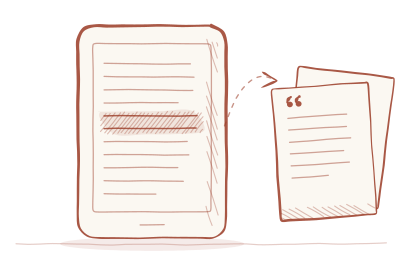
Rereading a whole book is a commitment. Rereading its best passages is not. Your highlights are a record of where a book mattered to you, and a few minutes with them can bring back most of what it gave you. If you want to go further, collect the passages that survive the second reading in a commonplace book.