Do you remember less when you read on a screen?
Is reading on paper better than on a screen or a Kindle? What a large review of the research found, and what it means for how you read.
· 3 min read
In short
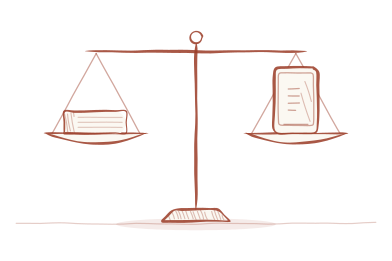
- Across dozens of studies, people understood texts slightly better on paper than on screens. The difference was small.
- The gap was larger when readers were short of time, and it appeared for informational texts. For stories, there was no reliable difference.
- How you read matters more than what you read on: slowly, without distractions, and coming back to what mattered.
On this page (6)
Many readers have a hunch that a book read on paper stays with them longer than one read on a screen. Others read everything on a Kindle and remember it just fine. Researchers have compared the two for decades, and the answer is more interesting than either camp expects.
What the research found
In 2018 a team of researchers led by Pablo Delgado combined the results of studies published between 2000 and 2017 that had people read comparable texts on paper and on screens, more than 170,000 participants in all. Their title gives away the headline: “Don't throw away your printed books”.
Three findings matter for everyday readers:
- Paper came out ahead, but only slightly. The advantage was small, the kind you would not notice in any single reading.
- Time pressure widened the gap. When readers had a fixed time, paper did better than when they could read at their own pace.
- It depended on the text. The paper advantage held for informational texts, but not for narrative ones. For novels and stories, the medium made no reliable difference.
Why paper might help
Researchers have proposed a few explanations, none of them settled:
- Screen habits. We spend much of our screen time skimming, and that way of reading may carry over to texts that deserve slower attention.
- A sense of place. On paper you know roughly where a passage was, on a left page, near the top, about two thirds of the way in. That physical map seems to help memory, and scrolling text offers less of it.
- Overconfidence. Readers on screens may feel they have understood a text sooner, and stop working at it earlier, especially under time pressure.
Skimming and deep reading
The cognitive neuroscientist Maryanne Wolf, who studies how the brain learns to read, has written at length about this in Reader, Come Home. Her concern is less the screen itself than what we have trained ourselves to do on it: scan, jump and move on. Deep reading, the slow kind that follows an argument or loses itself in a story, is a skill. Like any skill, it weakens when it isn't used.
That is a hopeful reading of the research. If the difference lies largely in habits, habits can be changed, and the device matters less than the attention you bring to it.
What about a Kindle?
An e-reader is not a laptop. There are no notifications, no tabs and no endless scrolling, and the page turns like a page. Many of the studies in the research compared paper with computer screens, so their findings don't transfer one to one, and studies on e-ink readers specifically are fewer.
What an e-reader does lack is the physical sense of place: every page looks the same and weighs nothing. A progress bar is a poor substitute for the thickness of the pages in your left hand.
Choosing by what you read
- Novels and stories: read them wherever you enjoy them most. The research found no reliable difference.
- Nonfiction you want to learn from: paper or an e-reader, with time to spare and without notifications. Highlight sparingly and write short notes.
- Long documents for work: if you need to understand them well, print them or send them to an e-reader rather than reading in a browser tab between emails.
- Anything under time pressure: this is where paper had the clearest edge. If you can, give yourself more time rather than switching medium.
What this means for your reading
The honest summary is: read on whatever you will actually read on. The difference between paper and screen is smaller than the difference between reading attentively and reading distractedly, and much smaller than the difference between reading a book once and returning to it.
Whatever the medium, what decides how much stays with you is what happens after the last page. We cover the research on that in how to remember what you read and spaced repetition for readers.